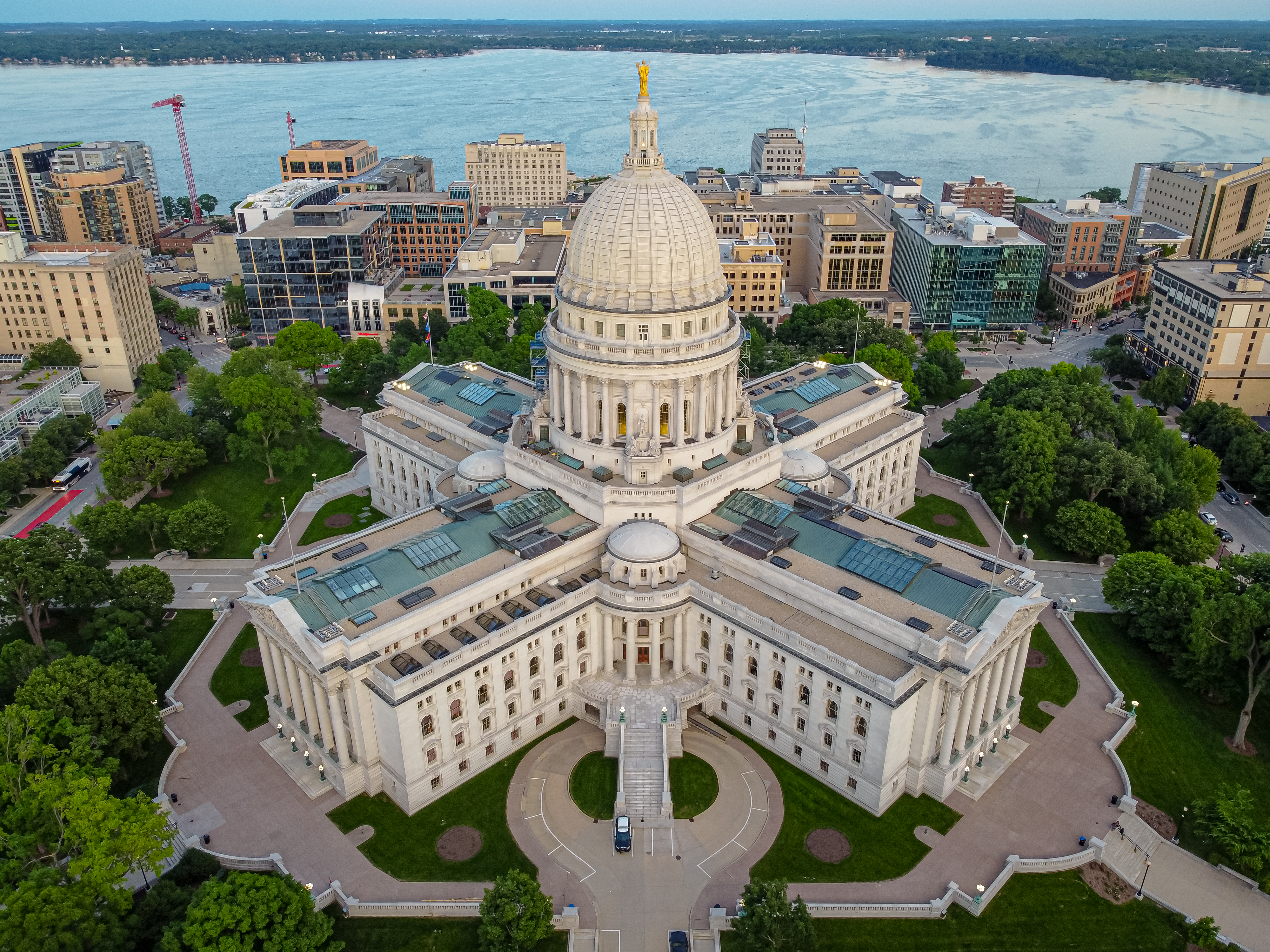
Wisconsin Democrats are considering a proposal to pledge the state's electoral votes to the national popular vote winner. Pleasant Prairie Sen. Bob Wirch, who co-sponsored an earlier version of the legislation, is involved in efforts to advance a new version.
A spokeswoman for Wirch said a new version of the measure has been drafted for the upcoming legislative session, the Milwaukee Journal Sentinel reported on Nov. 10. Wirch, the longest-serving member of the Wisconsin Senate, was first elected in 1996.
The bill would add Wisconsin to the National Popular Vote Interstate Compact (NPVIC). Under the compact, member states agree to award their electoral votes to whichever presidential candidate wins the most votes nationwide. Eighteen states and the District of Columbia have joined so far, according to the National Conference of State Legislatures. Those states account for 222 Electoral College votes, the AP reported. The compact needs states representing 48 more electoral votes to reach the 270 threshold that would make it effective.
Sen. Kelda Roys of Madison, the bill's lead author, said the measure would not be among the first bills Democrats pursue. "Democrats are laser focused on addressing the affordability crisis and the economic harms that Wisconsin families have suffered under Trump and the Republicans," Roys said, according to the Journal Sentinel. "That is job one, two, and three."
Roys, Wirch and Reps. Clinton Anderson of Beloit and Lee Snodgrass of Appleton last introduced the proposal in 2025. It went nowhere in the then-Republican-controlled Legislature.
Democrats won full control of Wisconsin state government in the Nov. 3 elections. Gov.-elect David Crowley told the Associated Press on Nov. 9 that he supports the idea. "We can do away with it," Crowley said of the Electoral College. "I am interested in having those conversations with the state Legislature."
Crowley and state lawmakers are set to be sworn in Jan. 4, 2027, according to the Wisconsin Examiner.
Republicans and conservative groups have promised a legal fight. Rick Esenberg, president of the Wisconsin Institute for Law and Liberty, said on X that his attorneys would sue if the legislation passed, the Journal Sentinel reported. Attorney Dan Lennington, who works at the firm, said on X that the compact "won't survive litigation," according to the Journal Sentinel.
Senate Minority Leader Julian Bradley, a Republican from New Berlin, called the compact "absolutely absurd and ridiculous" and said Republicans would "fight that tooth and nail," according to the Wisconsin Examiner.
"Wisconsin's electoral votes belong to Wisconsin voters, period," Bradley said in a statement to the Journal Sentinel. He argued the compact would send presidential candidates "chasing votes from coastal elites in New York and Los Angeles" instead of visiting Wisconsin communities.
Don Millis, the Republican chairman of the Wisconsin Elections Commission, said the change could make smaller battleground states like Wisconsin less relevant during presidential contests, according to the Journal Sentinel.
Sen. Dianne Hesselbein, who Democrats elected as the incoming Senate majority leader on Nov. 10, said her caucus still needs to discuss the issue. She told the Wisconsin Examiner that Senate Democrats plan to meet through November and December to hear from newly elected senators before setting priorities.
"15 years since I've been in the majority," Wirch said as he greeted colleagues at the Nov. 10 caucus meeting, according to the Wisconsin Examiner.
If Pennsylvania and Wisconsin joined the compact, reaching the 270 threshold would also require Michigan and either Arizona or Nevada to sign on, the AP reported.